


How to Clean Area Rugs Without Fading Colors or Shrinking Fibers

Quick Answer: To clean an area rug without fading or shrinking it, first identify the fiber and construction, then test for dye stability in a hidden area before using moisture or cleaner. Use controlled moisture, avoid aggressive scrubbing, dry the rug quickly and evenly, and be especially cautious with wool, viscose, jute, silk, fringe, and rugs with unstable dyes. If you are not sure what the rug is made of, professional evaluation is safer than experimenting.
Area rugs take a lot of daily punishment. They collect soil, absorb spills, trap pollen and pet dander, and sit quietly beneath furniture looking like they can handle anything. Many can. But a rug can look sturdy and still be surprisingly sensitive once water gets involved. The cleaning method that saves one rug ruins another, and the difference often comes down to fiber, dye, construction, and backing.
This guide walks through how to clean area rugs safely, covering what actually causes fading and shrinkage, which fibers need the most care, and when calling a professional is the smarter call. The cleaning method should follow the fiber, not the other way around.
Key Takeaways
Fiber identification comes first: A cleaning method that works well for a synthetic rug may damage silk, viscose, jute, or a hand-knotted wool rug, which is why proper rug care starts with understanding the fiber, construction, dye stability, and sensitivity of the material. Always identify before cleaning.
Always test for dye stability: A simple dye stability test tells you a lot before any water touches the rug, dampen a white cloth, press it against the colored sections, and watch for any color lifting onto the cloth. If color transfers, stop.
Wool is pH-sensitive: Wool is a protein fiber that is permanently damaged outside a narrow safe band: alkaline chemistry above about pH 8 lifts the fiber scales and causes felting and shrinkage, loosens the dye bond and causes bleeding, and produces progressive yellowing. Use pH-appropriate chemistry only.
Jute and viscose are high-risk: Excess moisture is the primary cause of permanent damage to jute, browning, shrinkage, mildew, and structural rot. For viscose, wet extraction or hot water cleaning can lead to irreversible color bleeding, fading, yellowing, and wrinkling.
Drying matters as much as cleaning: Leaving any rug damp for too long invites odor, browning, and mildew. Good airflow and fast, even drying protect every fiber type.
Quick-Start Prioritization Framework
Rug Type | DIY Reasonable? | Professional Better? | Effort Level | Key Risk |
|---|---|---|---|---|
Small synthetic (polypropylene, nylon, polyester) | Often | Optional | Low | Dye test first |
Wool (machine-made) | With caution | Preferred | Medium | pH, heat, moisture |
Wool (hand-knotted) | Risky | Yes | High | Felting, dye bleed |
Cotton | With caution | If large | Medium | Shrinkage |
Jute | Avoid wet cleaning | Specialty evaluation | High | Browning, rot |
Viscose / rayon | Avoid wet cleaning | Yes | High | Browning, collapse |
Silk / antique | No | Specialty care | Very High | Irreversible damage |
Unknown fiber | No | Yes | n/a | Unknown risk |
Start here if you're:
A homeowner with a synthetic rug and a small fresh spill: DIY blotting is reasonable, test dyes first, control moisture, dry quickly.
Dealing with a wool, cotton, or unknown rug: Get a professional evaluation before using any moisture or chemistry.
Facing pet urine, old stains, jute, viscose, or silk: Professional or specialty care is the right path.
First, Figure Out What the Rug Is Made Of
The label "area rug" tells you where it sits, not how it should be cleaned. A polypropylene rug from a big-box store and a hand-knotted wool rug from Iran both live on floors, but they have almost nothing else in common from a cleaning standpoint.
Why Fiber Type Changes Everything
Wool, silk, cotton, viscose, jute sisal, and synthetic fibers react differently to water, heat, friction, and cleaning products. Getting it wrong, even with mild products, can cause permanent damage. I've found that homeowners are often surprised to learn that the gentle-looking cleaner they used on their last rug caused the problem on this one. What actually works is matching the method to the material.
Area Rug Fiber Guide
Fiber | General Cleaning Consideration |
|---|---|
Polypropylene | Machine-made and stain, moisture and fade resistant, often moisture-tolerant |
Nylon | Generally durable but always test dyes before cleaning |
Polyester | Often forgiving; check backing before using moisture |
Wool | Requires careful chemistry and moisture control, protein fiber, pH-sensitive |
Cotton | Can shrink or distort; drying method matters significantly |
Jute | Made from thick plant fibers - easily absorbs moisture, which can make it difficult to remove stains and causes browning |
Viscose / rayon | Semi-synthetic material made from treated wood pulp, should be professionally cleaned because spot cleaning can affect color and texture consistency |
Silk | Specialty care recommended, high value, dye-sensitive, structurally delicate |
Fiber type is only part of the story. Construction, backing, dyes, fringe, and age all matter.
Check the Label Before You Clean
Before applying anything to a rug, look for the care label. It may be sewn to the back or edge of the rug and can tell you fiber content, manufacturer cleaning instructions, care symbols, country of origin, and construction details. These details determine whether the rug can be safely cleaned at home or should be handled by a rug cleaning specialist.
If the label is missing or illegible, treat the rug as an unknown and proceed with maximum caution. Do not guess based on appearance alone. A rug that looks like wool may contain viscose or a jute foundation. A rug that feels synthetic on top may have a cotton backing that shrinks.
Pro Tip: When in doubt, send a few photos to a professional cleaner before you start. A five-minute conversation can save you from a costly mistake.
Why Rugs Fade During Cleaning
Fading during cleaning has several possible causes, and not all of them are the homeowner's fault. Synthetic dyes are usually more colorfast, though cheap ones applied poorly bleed just as easily. Leftover residue from prior cleanings or spot treatments can also react with dyes and loosen their hold, and a pH imbalance from a solution that is too acidic or alkaline is one of the fastest ways to destabilize otherwise stable color.
Sometimes cleaning reveals fading that was already there. Other times the cleaning method actually moves or alters the dye. Heat, aggressive scrubbing, and sun exposure during outdoor drying can all accelerate or trigger color change. That is why a dye test before cleaning is non-negotiable, not optional.
Test for Dye Stability Before Cleaning
This is the single most important step before any moisture touches a rug. Use a rug dye stability test press a damp white cloth against the colored areas and check whether color lifts off. If it does, the rug has loose dye and needs professional care.
How to Perform the Test
Press a damp cloth firmly against one colored area of the rug and hold it for 30 to 60 seconds. Repeat this for each major color in the rug. Test reds, burgundies, and dark blues first, because those are the most common bleeders.
Let the test area dry completely before deciding how to proceed. If there is only a very light transfer of color to the test cloth, there is still some risk in washing the area rug. If the rug gives its color to the towel, the test has done its job, stop and consult a professional.
Dye testing should happen before every cleaning, even if the rug passed the last time. Chemistry, prior spills, and aging can all shift dye stability between cleanings.
Why Some Rugs Shrink
Shrinkage surprises most homeowners because it looks like it couldn't possibly happen to a floor rug. But the face fiber you see on top may tolerate moisture while the backing underneath does not. Felting shrinkage in wool is irreversible. Wool fiber can also experience relaxation shrinkage caused by mechanical action such as tumble drying, which may or may not be reversible. In either case, shrinkage is most severe when the fabric is water washed and then dried using conventional drying processes.
Heat above 30°C (86°F) causes felting and permanent shrinkage up to 10% in wool, while any cleaner above pH 8.0 degrades the wool protein and strips lanolin. Cotton foundations and jute backings add additional shrinkage risk even when the face fiber appears to be tolerating moisture.
What Causes Area Rugs to Shrink or Distort?
Risk Factor | Possible Result |
|---|---|
Excess water | Shrinkage or rippling |
Heat (water or drying) | Fiber distortion or felting |
Cotton foundation | Dimensional change |
Jute backing | Browning or shrinkage |
Uneven drying | Ripples or curling |
Aggressive extraction | Construction stress |
Improper hanging | Stretching or distortion |
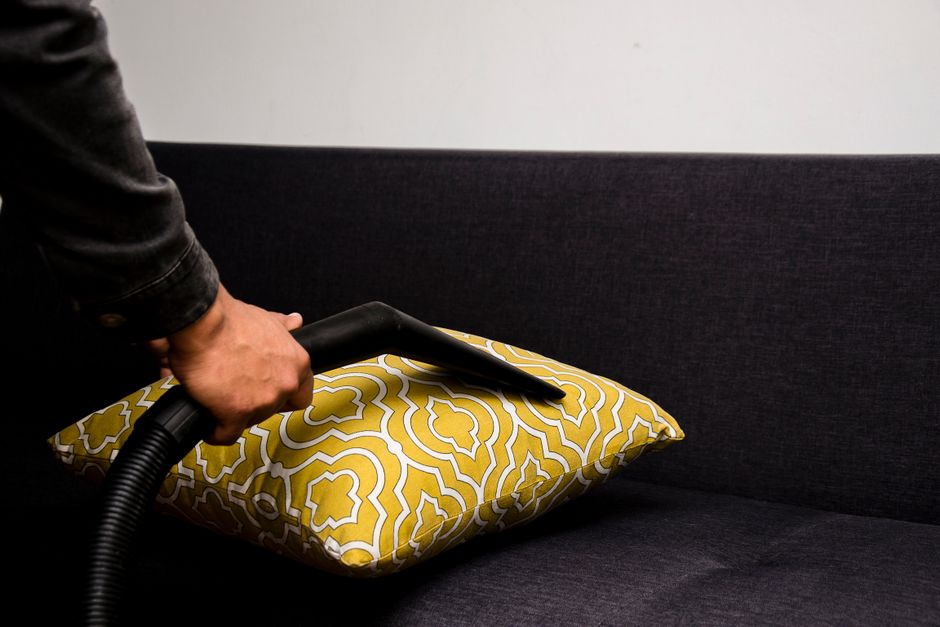
Vacuum Before You Add Moisture
Dry soil should be removed before any moisture is introduced. If you wet a rug that still contains grit, soil, pollen, and fine particles, you turn dry debris into wet mud that works its way deeper into the fiber. Flip the rug, vacuum the back flip it again, vacuum the front. Turn the beater bar off for shag and wool.
For routine care, vacuum wool rugs regularly using suction only or a vacuum setting without an aggressive beater bar. The same applies to any delicate rug. Aggressive beater-bar use on a viscose or silk rug can cause pile distortion before cleaning even begins.
Blot Stains Instead of Scrubbing
Scrubbing a stain into an area rug is one of the most reliable ways to make a small problem into a large one. Scrubbing spreads the stain outward, pushes it deeper into the foundation, causes fiber fuzzing, distorts texture, and can physically move unstable dye across the face of the rug.
The goal is to move the stain out of the rug, not move the rug fibers around. Work from the outer edge of the stain inward, using a clean white cloth and gentle blotting pressure. Replace the cloth when it picks up color or soil rather than scrubbing with the same surface repeatedly.
Pro Tip: Blot with a folded white cloth, not a colored one. If the cloth picks up dye from the rug, you have immediate information about dye stability before you apply any cleaner.
Use Controlled Moisture
Soaking is not the right approach for most area rugs. Even rugs that can handle moisture generally do better with controlled, targeted application rather than saturation. Spot treatment, surface cleaning, and low-moisture professional methods are appropriate for a much wider range of rugs than full wash methods.
Viscose and jute in particular are easily damaged by water-heavy cleaning, while most synthetics, polypropylene, polyester, nylon, tolerate it well. Before you soak the rug, make sure the rug is actually interested in being soaked. Fiber, backing, dye stability, and construction all need to be considered first.
Why Garden-Hose Cleaning Is Risky
Hosing a rug down in the backyard is a popular DIY approach, but it comes with real risks. A backyard and a garden hose are not automatically a rug-cleaning plant. Water stains natural fiber, can shrink it, and can rot the backing. If a natural fiber rug gets genuinely soaked, it usually does not come back.
Outdoor drying also introduces sun exposure, which can fade dyes, especially on rugs that were already borderline stable. Grass and soil underneath a wet rug create new contamination. And without controlled extraction, the rug may remain damp for many hours, creating ideal conditions for browning, odor, and mildew.
Why Rental Carpet Machines Can Be Risky on Area Rugs
Rental carpet cleaning machines are built for wall-to-wall carpet, which is a fundamentally different thing from a layered, constructed area rug. These machines are notorious for creating color bleeds and set-in stains in area rugs. A rental machine's low-power suction leaves too much water on the rug, which creates a pathway for the dyes to travel on and collide. Once the rug dries, the dyes stay where they are, and the beautiful patterns turn into a muddled mess.
Area rugs made from delicate materials like silk, wool, or antique textiles may not withstand the aggressive cleaning process of rental carpet cleaners. Over-agitation or excessive moisture can lead to color bleeding, shrinkage, or damage to the fibers. On a synthetic rug with stable dyes, the risk is lower. On anything else, it rises quickly.
Synthetic Rugs Are Often More Forgiving
Polypropylene, nylon, and polyester rugs generally tolerate professional on-site cleaning better than natural fiber rugs. Synthetic rugs (polypropylene polyester, nylon) are the most forgiving. They tend to have better moisture tolerance, more stable dyes, and constructions that can handle controlled extraction.
That said, they are not indestructible. Even synthetic rugs should receive a dye test before cleaning. The backing material, edge binding, and any latex adhesives can still be affected by over-wetting or aggressive chemistry. I've found that assuming a synthetic rug is completely bulletproof leads to backing delamination and binding damage that could have been avoided with simple checks.
Wool Rugs Need More Care
Wool is a protein fiber with a naturally mildly acidic pH of approximately 4.5 to 5.5. Push the pH too high with an ordinary alkaline cleaner and the alkalinity attacks the protein structure itself, which is what produces the shrinkage, felting, and color bleed that ruin wool rugs.
Wool also reacts badly to heat strong agitation, and prolonged moisture. The safe operating window for wool chemistry is narrower than most homeowners expect. Wool is only safe in a band of roughly pH 5 to 8, and happiest close to neutral, around 6.5 to 7.5. Use pH-appropriate, wool-safe products and cool water only.
Dr Green Carpet Care cleans many wool rugs on-site depending on construction, dye stability, and condition. Pricing is approximately $1.50 to $2.00 per square foot, often around $2. Current pricing should always be confirmed at time of booking.
Jute Rugs Are High-Risk
Dr Green's general position on jute rugs is straightforward: they are typically declined for standard on-site wet cleaning because the risk of browning, structural damage, and irreversible moisture problems is too high without specialty equipment.
Jute fibers contain lignin, a natural polymer. When soaked, lignin is drawn to the surface and oxidizes, creating permanent brown or yellow stains known as cellulosic browning. Excess moisture is the primary cause of permanent damage to jute, browning, shrinkage, mildew, and structural rot. Every cleaning method must use minimal moisture.
If your jute rug needs more than dry vacuuming, specialty evaluation is the right path. What looks like a simple cleaning can create a browning problem that is harder to explain than the original stain.
Viscose and Rayon Rugs Deserve Extra Caution
Viscose (also sold as rayon, bamboo silk, or art silk) is one of the most problematic fibers in the rug market. It looks beautiful and feels soft, but it has almost no tolerance for moisture. When moisture penetrates the fiber, natural sugars and residual sizing wick to the surface during drying and deposit a yellow-brown discoloration called cellulosic browning. Alkaline cleaning agents accelerate this reaction dramatically.
Rugs made with rayon can lose 30% or more of their tensile strength when wet, which makes aggressive cleaning or scrubbing during damp conditions particularly destructive. For valuable or unstable viscose pieces, specialty professional care is the safer choice.
Silk Rugs Should Usually Go to a Specialist
Silk rugs are often high-value, structurally delicate, and dye-sensitive. Silk and viscose require no water no DIY, and no exceptions as a general rule. Standard in-home cleaning, even careful low-moisture methods, introduces risks that are difficult to manage without specialist training, controlled environments, and appropriate chemistry.
If you have a silk rug that needs cleaning, the right answer is a specialty off-site rug cleaning facility. The cost of professional care is minor compared to the cost of replacing an irreversibly damaged piece.
Cotton Rugs Can Shrink More Than Homeowners Expect
Cotton is a natural fiber that responds to moisture in ways that surprise most homeowners. The face fiber, foundation, fringe, and backing can all be cotton, and each layer may respond differently. Even after washing, drying method and position matter. A cotton rug laid unevenly on a hard floor can dry into a rippled, distorted shape. Flat, even drying with good airflow is essential.
Fringe Is Often More Delicate Than the Rug
Fringe should be treated like part of the rug, not like a separate scrub brush. Aggressive brushing of fringe can cause tangling, fraying, and fiber breakage. Fringes can release absorbed dye during cleaning, staining lighter areas of the rug even if the main colors are stable. On wool or cotton rugs, fringe may also shrink at a different rate than the pile, causing visible puckering at the ends.
What About Pet Urine in Area Rugs?
Sometimes the smell is not just in the rug; it is in the rug, the pad, and the floor underneath it. Pet urine and other contaminants can move beyond the surface of a rug. Depending on the rug's construction, the contamination may reach deeper fibers, the foundation, backing, or even the flooring underneath.
The reason odors linger is due to urine salts and bacteria hiding deep in the rug's foundation, an area unreachable by surface cleaning. One surface treatment may improve appearance without addressing the layers below. For severe or repeated pet urine contamination, professional evaluation is the right starting point. Complete odor removal cannot be guaranteed in all cases.
Always Check the Floor Under the Rug
Before cleaning any area rug, lift it and inspect the flooring beneath. Hardwood, LVP, laminate, and tile can all be affected by moisture or pet contamination that migrated through the rug. Urine acidity breaks down the protective finish on hardwood and penetrates wood fibers, causing discoloration, warping, and structural damage.
Move the rug off the floor for any wet cleaning, and never put it back until both the rug and its backing are completely dry. Placing a damp rug back onto hardwood or laminate traps moisture against the floor surface, which can cause staining, warping, or finish damage.
Why Drying Matters as Much as Cleaning
Poor drying is where many otherwise acceptable cleanings go wrong. A rug that is clean but damp for 24 hours may develop odor, browning, or mildew problems that did not exist before cleaning. Trapped moisture causes mold within 48 hours and leads to backing rot.
Good airflow, an even drying surface, and a controlled environment are the basics. Avoid folding a damp rug, piling anything on top of it, or laying it face-down on a surface that traps moisture. For most rugs, a dry time of several hours in well-ventilated conditions is a reasonable target, but specific dry times vary by rug thickness, fiber, construction, and ambient humidity.
Rug Cleaning Mistakes and What They Can Cause
Mistake | Possible Result |
|---|---|
Soaking an unknown rug | Shrinkage or dye bleed |
Aggressive scrubbing | Fiber distortion |
Strong or wrong chemistry | Dye or fiber damage |
Slow or uneven drying | Odor or browning |
Cleaning over hardwood | Moisture damage to flooring |
Using hot water without testing | Shrinkage or dye movement |
Ignoring backing | Structural problems |
Skipping the dye test | Color bleeding |
Common DIY Cleaning Questions
Can You Use Dish Soap on an Area Rug?
Dish soap is not the worst thing that has ever been applied to a rug, but it is not a good choice either. It creates suds that are difficult to fully rinse, leaves a sticky residue that attracts soil rapidly, and may not be pH-appropriate for the fiber. A rug-compatible cleaner designed for the specific fiber is a better choice. That said, a small amount of gentle, dye-free dish soap on a polypropylene rug is unlikely to be catastrophic, just rinse thoroughly and dry quickly.
What About Vinegar?
Vinegar is recommended frequently in DIY cleaning content, but its acidity may affect certain dyes and fiber types. It is not a universal stain remover, and some manufacturers explicitly advise against it. When manufacturer guidance is available, it takes priority over general DIY advice.
What About Baking Soda?
Baking soda is sometimes suggested for odors, but it can be difficult to fully remove from dense rugs, foundations, and fringe. Residual baking soda left in the pile can act as a mild abrasive over time and attract moisture. It is not a substitute for enzyme treatment on pet odors.
Never Mix Random Cleaning Products
If the first cleaner did not work, turning the rug into a chemistry experiment is not step two. Combining bleach, ammonia, peroxide products, or multiple spot removers can create chemical reactions that damage fibers or dyes far more than the original stain.
How to Handle a Fresh Spill Safely
Remove excess material immediately (blot liquids, scrape solids gently)
Blot from the outside of the spill inward, do not scrub
Identify the rug fiber before applying anything
Check the care label
Test for dye stability in a hidden area
Apply a minimal amount of compatible cleaner
Blot again from outside inward with a clean white cloth
Dry the area thoroughly with good airflow
When DIY Rug Cleaning Makes Sense
DIY may be reasonable when the rug is a lower-cost synthetic with known fiber content, the manufacturer care label allows moisture, the dye test passes cleanly, the stain is small and fresh, and the backing is moisture-tolerant. Even then, controlled moisture and fast drying should be the approach.
When Professional Rug Cleaning Makes More Sense
Three honest triggers for professional care are value (hand-knotted, antique, sentimental), fiber (silk, viscose, jute, anything you cannot identify), and failure (a stain that survived a fiber-appropriate attempt, pet odor in the foundation, or a rug that smells musty). Add to that list: large rugs that are difficult to dry, rugs with unstable dyes, previous cleaning that caused damage, and anything with delicate fringe.
DIY Area Rug Cleaning vs. Professional Cleaning
Situation | DIY May Be Reasonable | Professional Better |
|---|---|---|
Small synthetic rug | Often | Optional |
Fresh small spill | Often | If stain remains |
Large wool rug | Riskier | Yes |
Pet urine | Limited | Often |
Unknown fiber | No | Yes |
Viscose / rayon | Risky | Yes |
Silk or antique rug | No | Specialty care |
Unstable dye | No | Specialty care |
Jute | Risky | Specialty evaluation |
How Does Dr Green Clean Area Rugs?
Dr Green Carpet Care provides on-site, in-home area rug cleaning throughout Metro Atlanta, appropriate professional cleaning performed in the home rather than full immersion washing in a dedicated rug plant. Each rug is evaluated individually.
The typical process may include: inspecting the fiber and construction; checking backing and fringe condition; reviewing stains and any pet concerns; testing for dye stability; vacuuming to remove dry soil first; applying rug-compatible chemistry appropriate to the fiber; using controlled agitation; removing loosened soil with controlled moisture and extraction; and managing drying carefully.
Dr Green Carpet Care provides eco-friendly, low-moisture area rug cleaning for suitable rugs throughout the Atlanta metro area, including Smyrna, Vinings, Marietta, Buckhead, Brookhaven, Sandy Springs, Dunwoody, Roswell, Alpharetta, Decatur, Chamblee, and East Cobb. Every rug is evaluated before cleaning for fiber type, dye stability, and condition.
Synthetic rug cleaning is priced at approximately $1.00 per square foot. Wool is approximately $1.50 to $2.00 per square foot, often around $2. Pricing varies based on fiber, size, construction, condition, pet treatment requirements, and specialty issues. Always confirm current pricing at time of booking.
Why Dr Green Does Not Clean Every Rug
This matters, and it is worth being direct about it. Some rugs are better served by specialty off-site rug cleaning facilities that have full-immersion washing capacity, controlled drying rooms, and specialists trained on antiques, silk, and structurally fragile pieces.
The right cleaning decision is sometimes knowing when a rug should leave the house and go to a specialty facility. That includes silk rugs, valuable antiques, rugs with severely unstable dyes, pieces with heavy urine contamination throughout the foundation, fragile or rotting jute, and high-risk viscose rugs where any moisture introduces unacceptable risk. Referring a rug to the right facility is a service, not a limitation.
Area Rug Cleaning Checklist Before You Start
Identify the fiber
Read the care label
Inspect the backing
Check the fringe condition
Vacuum dry soil from both sides
Test dye stability with a white cloth
Use only compatible chemistry for the fiber
Use controlled moisture, do not soak
Blot instead of scrubbing
Dry quickly and evenly with good airflow
Check flooring underneath before and after
Stop immediately if colors transfer or fibers distort
10 Area Rug Cleaning Mistakes That Can Ruin a Rug
Soaking an unknown rug without fiber identification or dye testing
Skipping the dye stability test, even on rugs that passed before
Using excessive heat (hot water, steam, or hot dryer air on wool)
Scrubbing aggressively instead of blotting
Getting a jute rug wet without a plan for rapid, controlled drying
Treating a viscose rug the same way as a synthetic fiber rug
Ignoring the backing, the face fiber may survive while the backing does not
Leaving the rug damp for too long after cleaning
Placing a damp rug back directly onto hardwood or laminate flooring
Continuing to clean after colors start transferring
What Atlanta Area Rugs Deal With
Atlanta's combination of high humidity, heavy spring pollen, Georgia red clay, and a high rate of pet ownership creates conditions where carpets and rugs accumulate debris faster than in drier climates. Area rugs in family rooms, entryways, and home offices in neighborhoods like Smyrna, Marietta, Vinings, Brookhaven, Sandy Springs, Roswell, Alpharetta, and East Cobb face a specific combination of challenges that most general cleaning advice does not fully address.
Atlanta's red clay soil is particularly difficult because it bonds to carpet fibers and can stain if not addressed quickly. The combination of high humidity seasonal pollen, and frequent temperature swings means rugs in this area often need cleaning more frequently than the same rug in a drier climate. Humidity promotes dust mite reproduction and can cause odors to develop more quickly, while pollen and other outdoor allergens track inside and settle deep into rug fibers.
Condo balconies in Buckhead and Midtown, active family rooms in East Cobb, and pet-heavy households throughout the metro all bring different soil loads to their rugs. Getting pollen season right, cleaning after peak spring pollen rather than during it, helps protect rug fibers from repeated exposure before cleaning.
Frequently Asked Questions
How do you clean an area rug without fading it?
Identify the fiber, test every color zone for dye stability using a damp white cloth before applying any cleaner, use chemistry compatible with the fiber type, control moisture, and avoid aggressive scrubbing. Hand-knotted rugs with natural dyes bleed more than power-loomed synthetic-dye rugs, send them to a wool specialist.
How do you prevent an area rug from shrinking?
Never immerse a wool rug fully in water; instead use low-moisture surface extraction with pH-appropriate chemistry, cool water, minimal agitation, and air-
Sources
Rug Material Comparison Guide, Rugs Direct. Fiber-by-fiber care and cleaning overview for wool, polypropylene, polyester, jute, cotton, and viscose. Rug Materials Guide: Wool vs Cotton vs Jute & More
How to Clean an Area Rug, Carpet Exchange. Step-by-step guidance by fiber type including wool, jute, and synthetic. https://carpetexchange.com/flooring-school/how-to-clean-area-rugs
Rug Guide: The Ultimate Reference for Choosing the Perfect Rug, Kirkendall Design. Fiber properties, care tips, and cleaning considerations for all major rug materials. https://kirkendalldesign.com/rug-guide-the-ultimate-reference-for-choosing-the-perfect-rug/
How to Care for Different Rug Materials, Seed Sheets. Cleaning guidance for wool, viscose, jute, sisal, silk, cotton, and synthetic fibers. https://seedsheets.com/how-to-care-for-different-rug-materials/
Rug Cleaning by Fiber: What Your Rug Can Survive, Master Clean Bay Area. Fiber-specific cleaning tolerances and professional triggers. https://mastercleanbayarea.com/the-ultimate-rug-cleaning-guide-expert-tips-and-tricks-for-san-jose-residents/

Comments